






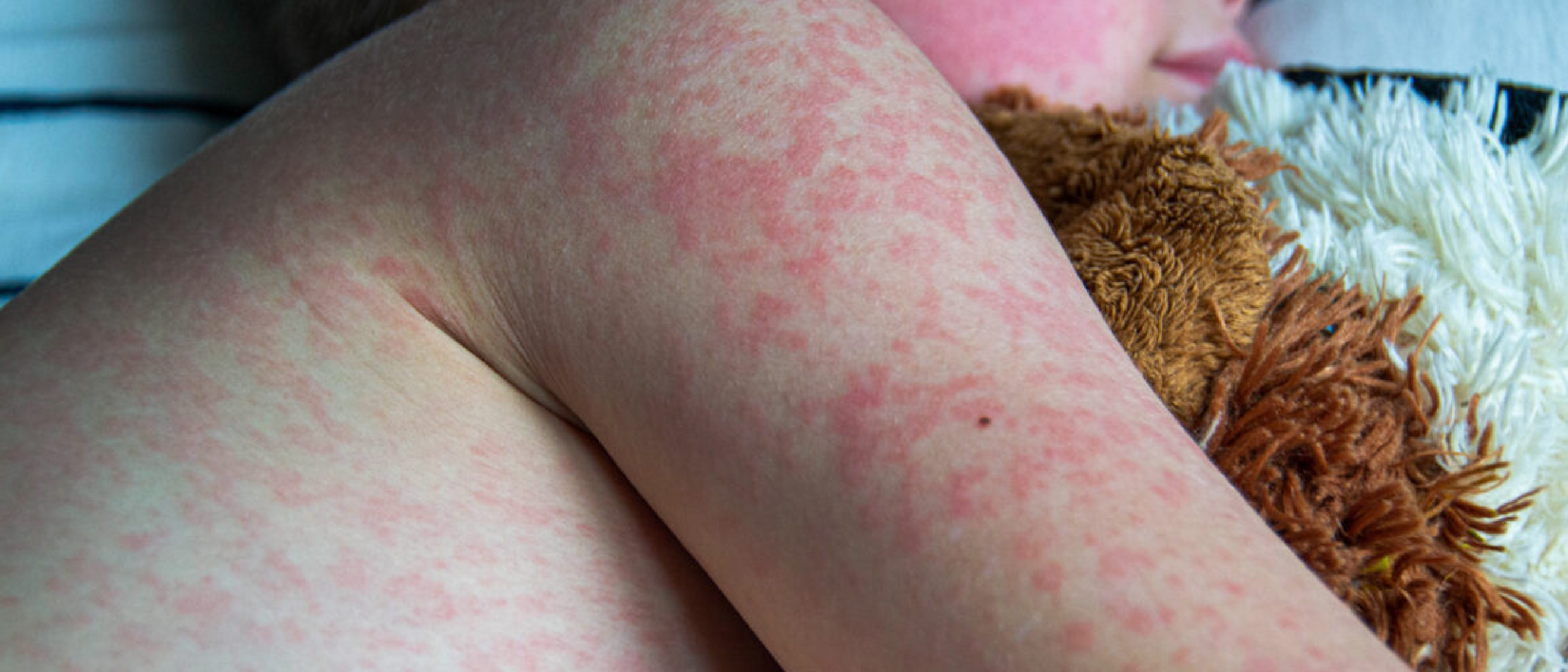
Why This Measles Death Matters Beyond New York
The tragic loss of a child to measles in New York marks the first such fatality in the state in more than three decades. While a single case can be dismissed as an isolated incident, the broader context reveals a disturbing national trend: seven measles‑related deaths have been recorded in the United States this year, six of them in Pennsylvania alone.
Key implications include:
- Erosion of herd immunity: Even a modest dip in vaccination coverage can push communities below the 95 % threshold needed to halt measles transmission.
- Public‑health system strain: Outbreaks force health departments to divert resources from routine services to contact tracing, isolation, and emergency vaccination clinics.
- Policy credibility at risk: When a federal health secretary openly opposes established vaccine recommendations, public confidence in agencies such as the CDC and WHO erodes, making future campaigns harder to launch.
The New York case is a bellwether for what could become a recurring pattern if the underlying drivers are not addressed.
The National Landscape: Pennsylvania’s Outbreak as a Microcosm
Pennsylvania’s outbreak, now exceeding 1,430 confirmed cases, illustrates how quickly measles can spread in a partially immunized population. Prior to this year, the state had not recorded a measles death in 35 years, underscoring how rapidly the situation can change.
Outbreak dynamics
- Index cases: International travel brought the virus into the state, where unvaccinated schoolchildren acted as amplifiers.
- Transmission hotspots: Urban districts with lower school‑based vaccination compliance saw the highest attack rates.
- Age distribution: Over 60 % of cases occurred in children under 10, the group most vulnerable to severe complications.
These dynamics mirror classic epidemiological models where the basic reproduction number (R₀) for measles—estimated between 12 and 18—means a single infected individual can spark a cascade if immunity gaps exist.
The Role of Misinformation and Policy Shifts
Since the early 2020s, vaccine uptake has slipped nationwide, a trend directly linked to the proliferation of health misinformation. The appointment of Robert F. Kennedy Jr. as U.S. Health Secretary has amplified this problem. Kennedy’s long‑standing anti‑vaccine activism, channeled through his organization Children’s Health Defense, now influences federal policy.
Specific policy actions under the current administration
- Undermining CDC guidelines: Federal recommendations for measles‑MMR (measles‑mumps‑rubella) vaccine schedules have been delayed or diluted.
- Funding for “alternative safety studies”: Grants have been allocated to research groups investigating alleged, unproven vaccine harms, diverting resources from proven public‑health interventions.
- Public messaging: Press releases and social media posts from the Health Department have highlighted anecdotal “vaccine injury” stories without contextual data, creating a false equivalence between rare adverse events and the well‑documented risks of measles infection.
The situation parallels other health‑misinformation battles, such as the opioid misinformation campaign examined in SR-17018: A Potential Opioid Exit Banned by DEA . In both cases, fringe narratives gain legitimacy through political platforms, complicating evidence‑based decision‑making.
Technical Breakdown: How Measles Spreads in a Modern Society
Understanding the virology and transmission mechanics is essential for designing effective countermeasures.
Virology basics
- RNA virus: Measles is a single‑stranded, negative‑sense RNA virus belonging to the Paramyxoviridae family.
- High contagion: The virus remains airborne for up to two hours after an infected person leaves a room, enabling aerosol transmission.
- Incubation period: Typically 10‑14 days, during which the infected individual is asymptomatic but already contagious.
Immunological considerations
- Vaccine efficacy: Two doses of the MMR vaccine confer ~97 % protection; a single dose offers ~93 % protection.
- Waning immunity: Unlike some vaccines, measles immunity does not wane significantly over time, making primary series completion the critical factor.
Surveillance technology gaps
- Delayed reporting: Many states still rely on manual case entry, leading to reporting lags of 48‑72 hours.
- Limited genomic sequencing: Without routine viral genome sequencing, tracking importation sources and mutation patterns is difficult.
Investing in real‑time electronic case reporting and expanding sequencing capacity would allow health authorities to pinpoint outbreak origins faster, a lesson reinforced by the recent measles surge.
Industry Impact: From Pharma to Tech
The resurgence of measles has ripple effects across multiple sectors.
Pharmaceutical manufacturers
- Vaccine demand spikes: Companies producing MMR vaccines have seen a 15‑20 % increase in orders, prompting discussions about scaling production.
- Supply chain stress: Raw material shortages for gelatin‑based vaccines could become a bottleneck if demand continues to outpace supply.
Health‑tech startups
- Digital immunization passports: Platforms that verify vaccination status for travel or school enrollment are gaining attention, though privacy concerns remain.
- Contact‑tracing apps: The measles outbreak has revived interest in Bluetooth‑based exposure notification systems, previously focused on COVID‑19.
Insurance and employer health plans
- Cost escalation: Hospitalizations for severe measles complications (pneumonia, encephalitis) raise claim costs, prompting insurers to revisit coverage policies for preventive vaccinations.
These industry shifts intersect with broader societal debates about personal freedom versus collective safety, a tension also explored in Why Physical Buttons Are Returning to Car Interiors , where user autonomy drives design choices.
Future Outlook: Scenarios and Mitigation Strategies
If current trends persist, the United States could see measles re‑establishing itself as an endemic disease, a scenario public‑health officials have warned about for years.
Best‑case scenario
- Policy reversal: A new administration reinstates CDC guidelines, funds school‑based vaccination drives, and curtails misinformation campaigns.
- Community engagement: Faith‑based and local leaders partner with health departments to address vaccine hesitancy, leading to a 5‑point rise in MMR coverage within two years.
Worst‑case scenario
- Continued politicization: Federal health messaging remains fragmented, and anti‑vaccine rhetoric spreads unchecked.
- Outbreak amplification: Seasonal travel and large gatherings (e.g., festivals) become super‑spreader events, pushing case counts above 5,000 nationwide.
Actionable recommendations
- Legislative safeguards: Enact laws requiring proof of measles vaccination for school enrollment, with limited medical exemptions.
- Data infrastructure: Deploy a national, interoperable immunization registry accessible to clinicians, schools, and public‑health agencies.
- Targeted communication: Leverage trusted community influencers to counteract misinformation, using data‑driven messaging rather than fear‑based tactics.
The path forward hinges on aligning scientific evidence with political will—a lesson also evident in the debate over AI tools in education, discussed in Google Lets Schools Opt Out of AI, but Search Goes Dark .
Frequently Asked Questions
Q1: How many measles cases have been reported in the U.S. this year? A: Over 1,430 confirmed cases have been documented, with the majority concentrated in Pennsylvania.
Q2: Why is the MMR vaccine still recommended despite claims of harm? A: Extensive peer‑reviewed research shows the MMR vaccine is safe; serious adverse events occur in less than one in a million doses, far lower than the morbidity and mortality associated with measles infection.
Q3: Can adults get measles if they missed childhood vaccinations? A: Yes. Adults lacking documented immunity are susceptible and can experience severe complications, including pneumonia and encephalitis.
Q4: What role does the Health Secretary play in vaccine policy? A: The Secretary oversees the Department of Health and Human Services, influences funding allocations, and can shape national public‑health messaging. When the officeholder opposes established vaccine science, it can undermine agency credibility.
Q5: How can I verify my vaccination status? A: Most states maintain electronic immunization registries. You can request your record through your state health department’s website or ask your primary care provider.
Conclusion
The New York measles death is more than a heartbreaking statistic; it is a stark indicator that the United States is at a crossroads in public‑health policy. Declining vaccination rates, amplified by high‑profile anti‑vaccine advocacy, have already produced a lethal outbreak in Pennsylvania and now claim a life in New York
now claim a life in New York, and should serve as a rallying cry for immediate, coordinated action at every level of government and society.
First, federal leadership must be realigned with the scientific consensus. Restoring the CDC’s authority to issue timely, evidence‑based vaccine recommendations—and shielding those recommendations from political interference—is essential. This includes reinstating the 2022 “Measles Elimination Initiative,” which earmarked funds for school‑based immunization clinics, rapid response teams, and public‑education campaigns.
Second, state and local jurisdictions need to tighten exemption policies. Data from states that have limited non‑medical exemptions consistently show higher MMR coverage and fewer outbreaks. Implementing a uniform “vaccinate or test” requirement for school entry, with narrowly defined medical exemptions, would close one of the most exploitable loopholes in the current system.
Third, the private sector can accelerate progress by adopting interoperable digital health records that automatically update immunization status across providers, schools, and public‑health databases. Such infrastructure reduces reporting lag, enables real‑time outbreak mapping, and supports targeted outreach to under‑immunized neighborhoods.
Finally, community engagement remains the linchpin of any successful vaccination strategy. Trusted messengers—faith leaders, pediatricians, teachers, and local influencers—must be equipped with clear, culturally resonant information that counters misinformation without alienating hesitant families. When people see vaccination as a shared responsibility rather than a top‑down mandate, uptake improves organically.
The stakes are stark: without decisive intervention, measles could re‑establish endemic transmission in the United States, reversing decades of progress and endangering the most vulnerable among us. The tragedy in New York is a preventable loss; it must not become the prelude to a larger public‑health catastrophe.
Call to Action for Readers
- Check your records: Verify that you and your children have received two doses of the MMR vaccine, spaced at least four weeks apart.
- Advocate locally: Attend school board meetings and support policies that limit non‑medical vaccine exemptions.
- Share reliable information: Use reputable sources such as the CDC, WHO, and peer‑reviewed journals when discussing vaccines with friends and family.
- Support public‑health funding: Contact your congressional representatives and urge them to protect and increase funding for immunization programs and disease surveillance.
By taking these concrete steps, each of us can help rebuild the herd immunity wall that protects our communities from measles and other vaccine‑preventable diseases.
Source: Original Article