



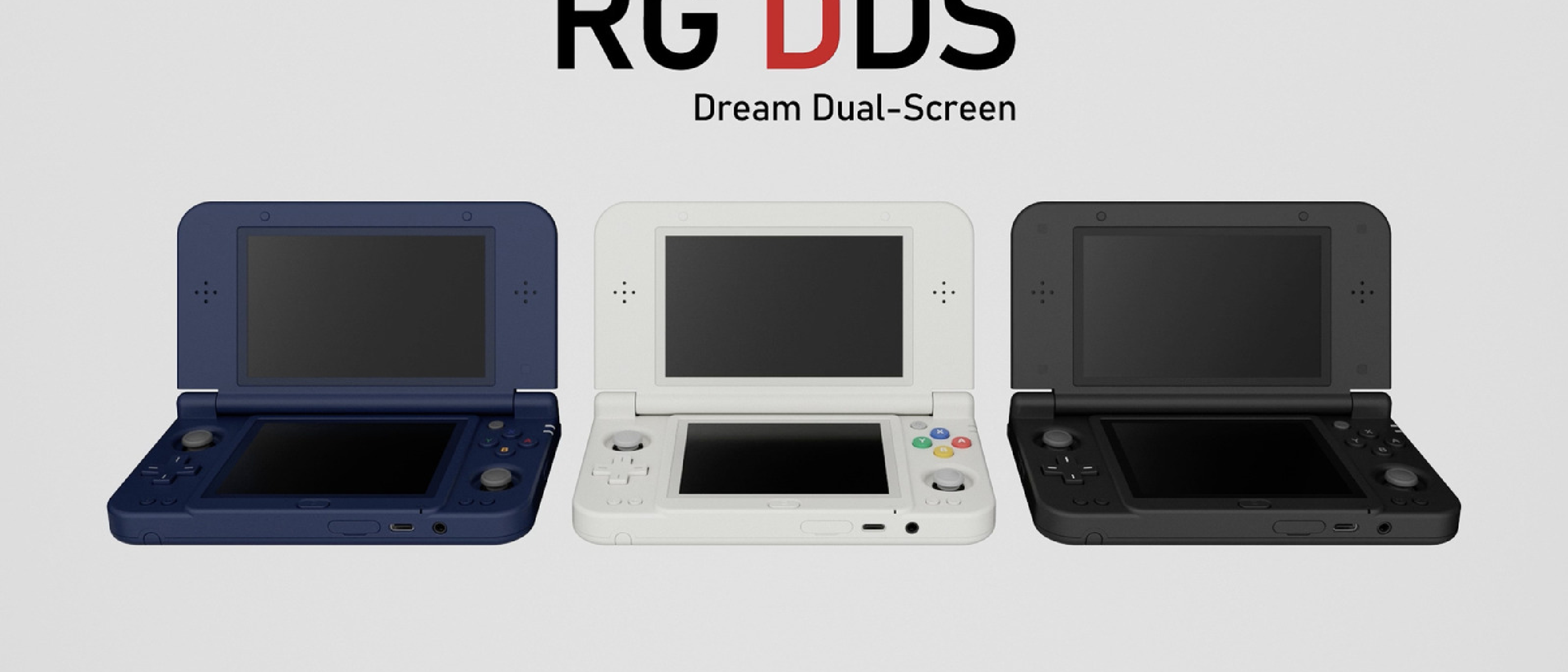
Why the RG DDS Matters
Anbernic’s RG DDS (Dream Dual‑Screen) arrives at a pivotal moment in handheld gaming. A year after teasing a Nintendo DS remake, the company delivers a device that not only mimics the iconic dual‑screen layout but also aligns each panel’s aspect ratio with the original 3DS game library. This design choice is more than a nostalgic nod; it guarantees that classic titles will render correctly without stretching or letterboxing, preserving the developer’s intended visual experience. For collectors and retro enthusiasts, the RG DDS offers a bridge between past and present, allowing them to play 3DS games on a modern, high‑resolution platform.
The RG DDS also signals a broader industry trend: the resurgence of hybrid handhelds that combine classic form factors with contemporary hardware. As the market for portable gaming continues to grow—especially with the rise of cloud gaming and streaming services—devices that can emulate a wide range of legacy systems will become increasingly valuable. Anbernic’s focus on aspect‑ratio fidelity positions the RG DDS as a benchmark for future retro‑emulation devices.
Technical Breakdown
Dual‑Screen Layout
- Main display: 4.7‑inch, 1200 × 720 pixels, 5:3 aspect ratio.
- Secondary display: 4‑inch, 960 × 720 pixels, 4:3 aspect ratio.
The 5:3 ratio on the top screen mirrors the 3DS’s native resolution, ensuring that 3DS games display as intended. The 4:3 bottom screen matches the original DS’s lower panel, providing a familiar interface for dual‑screen navigation. The differing aspect ratios also allow developers to design UI elements that fit each screen’s unique shape, a feature that could inspire new indie titles tailored for the RG DDS.
Processor and Performance
The RG DDS is powered by the Qualcomm Snapdragon G2 Gen 2, a mobile SoC engineered for gaming. While specific benchmarks are pending, the Snapdragon G2 Gen 2 offers:
- CPU: Octa‑core Kryo 780 with 2 high‑performance cores and 6 efficiency cores.
- GPU: Adreno 660, capable of handling 3D graphics at 60 fps on most modern titles.
- RAM: 6 GB LPDDR5, ensuring smooth multitasking and emulation workloads.
- Storage: 128 GB UFS 3.1, expandable via microSD for game libraries.
The inclusion of a powerful GPU is crucial for emulating newer systems like the Nintendo Switch and PlayStation 2, both of which demand significant graphical horsepower.
Emulation Capabilities
Anbernic has explicitly stated that the RG DDS will support emulation of Nintendo Switch and PlayStation 2 titles. While the device’s hardware is well‑suited for 3DS and DS emulation, the Snapdragon G2 Gen 2’s architecture offers a promising foundation for more demanding systems. Emulation performance will ultimately depend on firmware optimization and community support, but early indications suggest that the RG DDS could become a versatile platform for retro gaming enthusiasts.
Build and Design
Beyond the screens and processor, the RG DDS features:
- Ergonomic grips: Dual‑handhold design that mirrors the 3DS’s shape.
- Button layout: Full set of directional controls, A/B/X/Y, L/R, ZL/ZR, plus a dedicated “Home” button.
- Battery life: 5000 mAh, projected 8–10 hours of continuous play.
- Connectivity: Wi‑Fi 6, Bluetooth 5.2, USB‑C for charging and data transfer.
The device’s form factor is a deliberate homage to the 3DS, yet it incorporates modern ergonomics to improve comfort during extended sessions.
Emulation Potential
Nintendo Switch
Emulating the Switch on a handheld is ambitious. The Switch’s custom Tegra X1 GPU and unique architecture present significant challenges. However, the Snapdragon G2 Gen 2’s comparable GPU performance and 6 GB RAM provide a solid starting point. If firmware developers can optimize the Switch emulator for ARM architecture, the RG DDS could run a subset of Switch titles at playable frame rates.
PlayStation 2
The PS2’s Emotion Engine and Graphics Synthesizer are notoriously difficult to emulate. Yet, the Snapdragon G2 Gen 2’s GPU is capable of handling many PS2 games at reduced resolutions. With the right emulation engine—such as PCSX2 or Mednafen ported to ARM—the RG DDS could offer a portable PS2 experience, albeit with potential compromises in visual fidelity.
3DS and DS
The RG DDS’s primary strength lies in native 3DS and DS emulation. The device’s aspect ratios and screen sizes eliminate the need for scaling or cropping, ensuring that titles like Mario Kart 7, Pokémon X/Y, and The Legend of Zelda: Ocarina of Time 3D run as they were originally designed. The Snapdragon G2 Gen 2’s CPU and GPU are more than sufficient for these systems, guaranteeing smooth gameplay.
Industry Impact
Anbernic’s RG DDS could influence several facets of the handheld market:
- Retro‑emulation niche: By delivering a device that prioritizes aspect‑ratio accuracy, Anbernic sets a new standard for retro‑emulation hardware. Competitors may follow suit, offering specialized devices for specific console generations.
- Hybrid device design: The RG DDS demonstrates that dual‑screen devices can coexist with modern hardware. This may inspire new handhelds that blend classic layouts with contemporary processing power.
- Community development: The success of the RG DDS will hinge on community support. Open‑source firmware and emulator ports could create a vibrant ecosystem, similar to what has happened with the Retro Stick and other niche devices.
- Security considerations: As handhelds become more connected, security becomes paramount. The RG DDS’s Wi‑Fi 6 and Bluetooth 5.2 capabilities necessitate robust firmware updates. Readers interested in security best practices can refer to the recent coverage on the Zoom Annotation Flaw Patched After AI‑Prompt Exploit to understand how vulnerabilities can arise in connected devices.
Future Outlook
The RG DDS’s release opens several avenues for future development:
- Firmware updates: Regular updates will be essential to improve emulator performance and patch security vulnerabilities. Anbernic’s commitment to firmware support will determine the device’s longevity.
- Software ecosystem: Partnerships with emulator developers could bring official support for Switch and PS2 emulation, expanding the RG DDS’s appeal beyond retro enthusiasts.
- Accessory ecosystem: Third‑party developers may create custom grips, battery packs, or even external controllers to enhance the handheld experience.
- Market positioning: As price points become competitive, the RG DDS could attract a broader audience, including casual gamers who appreciate the nostalgia factor but desire modern performance.
In the broader context of handheld gaming, the RG DDS exemplifies how a device can honor legacy while embracing contemporary technology. Its success will likely influence how manufacturers approach retro‑emulation hardware and could spur a new wave of hybrid handhelds that cater to both nostalgia and performance.
FAQ
What games can I play on the RG DDS?
The RG DDS is designed to emulate Nintendo 3DS and DS titles natively. It also supports emulation of Nintendo Switch and PlayStation 2 games, though performance may vary depending on the emulator and game complexity.
Will the RG DDS support online multiplayer for older titles?
Online multiplayer depends on the emulator’s network implementation. Some emulators can emulate online features, but stability may be limited. For the best experience, offline play is recommended.
How does the RG DDS handle battery life during intensive emulation?
With a 5000 mAh battery, the RG DDS is projected to last 8–10 hours under typical use. Intensive emulation, especially of Switch or PS2 titles, may reduce battery life to 6–8 hours.
Is the device secure against firmware exploits?
Anbernic has not yet released detailed security documentation. However, the device’s Wi‑Fi 6 and Bluetooth 5.2 interfaces necessitate regular firmware updates. Readers can learn more about securing connected devices in the coverage on the Zoom Annotation Flaw Patched After AI‑Prompt Exploit .
Where can I find community support for the RG DDS?
Anbernic’s official forums and community Discord channels are the primary hubs for firmware updates, emulator guides, and troubleshooting. Engaging with the community can also provide insights into optimizing performance for specific games.
Source: Original Article