




Why Fal’s $16 B Valuation Matters
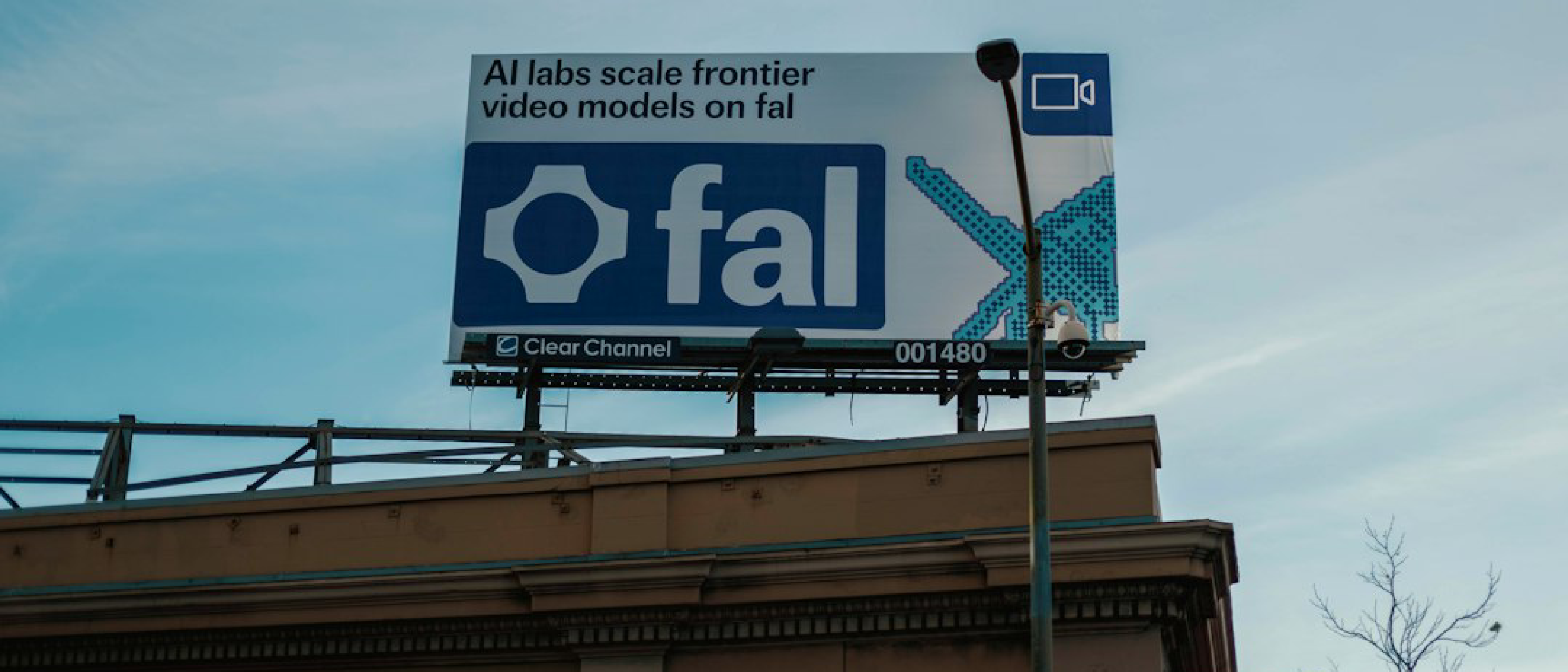
Fal’s latest Series F round of $1.3 billion, announced alongside a $350 million Series E raise, pushes the company’s post‑money valuation to $16 billion—exactly double the $8 billion figure reported in April. The rapid escalation is more than a headline; it signals a structural shift in how enterprises and developers consume machine‑learning workloads.
- Revenue traction – Fal has already crossed $800 million in annualized revenue, a milestone that places it among the few AI‑infrastructure firms that have turned sizable top‑line growth into sustainable cash flow.
- Capital confidence – Lead investors Bessemer Venture Partners, Nvidia, Sound Ventures, and T. Rowe Price are betting that Fal’s platform will become the de‑facto “AWS for generative AI inference.” Their participation validates the market’s appetite for a managed service that can handle high‑throughput video, image, and audio models without the overhead of custom hardware provisioning.
- Strategic timing – The funding arrives at a moment when open‑source models (e.g., Stable Diffusion, Whisper) are being adopted at scale. Companies that lack in‑house GPU clusters are looking for turnkey inference, and Fal’s pricing model—pay‑as‑you‑go compute with built‑in autoscaling—directly addresses that need.
In short, the valuation jump is a barometer of the broader inference economy, where latency, cost‑efficiency, and ease‑of‑integration are becoming decisive competitive factors.
Technical Breakdown of Fal’s Inference Platform
Fal’s core product is a cloud‑native inference service that abstracts away the complexities of GPU orchestration. While the company is deliberately tight‑lipped about proprietary optimizations, several architectural themes can be inferred from public statements and the broader industry context.
Multi‑Modal Model Support
- Video – Real‑time transcoding, frame‑level object detection, and generative video synthesis are supported through pipelines that can process up to 4 K streams concurrently.
- Image – High‑resolution image classification, segmentation, and diffusion‑based generation run on mixed‑precision kernels to squeeze maximum throughput from each GPU.
- Audio – Speech‑to‑text, voice conversion, and music generation models are hosted with low‑latency audio buffering, enabling interactive applications such as live captioning.
Compute Infrastructure
Fal leverages a heterogeneous fleet of Nvidia GPUs (A100, H100) and custom ASICs where available. The partnership with Nvidia not only provides preferential access to the latest tensor cores but also integrates Nvidia’s Triton Inference Server for model serving, enabling:
- Dynamic batching – Requests are aggregated on‑the‑fly to improve GPU utilization without sacrificing per‑request latency.
- Model versioning – Seamless rollout of updated weights while preserving backward compatibility for existing clients.
- Telemetry & autoscaling – Real‑time metrics feed an autoscaler that provisions additional nodes during traffic spikes, a capability that directly translates into cost savings for customers.
Cost Model
Fal’s pricing is consumption‑based, measured in “GPU‑seconds” with discounts for committed usage. This model mirrors the pay‑per‑use approach popularized by serverless compute, but with the added nuance of GPU pricing tiers. By pooling demand across many tenants, Fal can achieve higher aggregate utilization, allowing it to offer competitive rates that undercut on‑premise GPU farms.
Industry Impact and Competitive Landscape
The inference market is heating up, and Fal’s funding round reshapes the competitive dynamics.
Direct Competitors
| Company | Core Focus | Margin Challenges |
|---|---|---|
| Baseten | Low‑code model deployment | Thin margins due to high GPU spend |
| Fireworks AI | Generative text & image APIs | Similar cost pressures |
| Modal | Serverless compute for ML pipelines | Balancing latency vs. price |
All three rivals are experiencing rapid user growth, but their gross margins remain constrained because compute costs dominate revenue. Fal’s ability to double its valuation suggests it has either secured more favorable hardware pricing (thanks to Nvidia’s involvement) or engineered efficiency gains that translate into healthier margins.
Ripple Effects Across the AI Ecosystem
- Open‑source model adoption – As developers gravitate toward community‑driven models, the need for scalable, reliable inference spikes. Fal’s platform reduces the barrier to productionizing these models, accelerating their commercial uptake.
- Enterprise AI strategy – Large firms that previously built private inference clusters can now outsource to Fal, reallocating engineering resources to product differentiation rather than infrastructure maintenance.
- Hardware demand – Fal’s partnership with Nvidia may influence future GPU supply allocations, potentially tightening the market for other AI‑inference providers that lack similar alliances.
Related Coverage
For a broader view of how AI content moderation is shaping platform policies, see the recent article on YouTube’s new rules: [https://ltdeveloperblogs.github.io/posts/youtube-clarifies-policies-around-ai-slop-and-upsetting-videos(https://ltdeveloperblogs.github.io/posts/youtube-clarifies-policies-around-ai-slop-and-upsetting-videos).
The security implications of AI‑driven prompts were highlighted in Zoom’s annotation flaw fix: [https://ltdeveloperblogs.github.io/posts/zoomsday-hack-uncovered-using-fewer-than-20-ai-prompts(https://ltdeveloperblogs.github.io/posts/zoomsday-hack-uncovered-using-fewer-than-20-ai-prompts).
A deeper dive into AI‑related zero‑day exploits can be found here: [https://ltdeveloperblogs.github.io/posts/zoom-flaw-let-an-attacker-take-over-your-device-including-iphone-and-mac(https://ltdeveloperblogs.github.io/posts/zoom-flaw-let-an-attacker-take-over-your-device-including-iphone-and-mac).
Future Outlook: What to Expect from Fal and the Inference Market
Short‑Term (12‑18 months)
- Expanded model catalog – Expect Fal to onboard more specialized models (e.g., medical imaging, satellite video) to capture niche verticals.
- Edge inference – With latency‑critical applications (AR/VR, autonomous drones), Fal may launch edge‑node offerings that bring GPU resources closer to the data source.
- Pricing incentives – To stay ahead of competitors, Fal could introduce tiered discounts for high‑volume customers, further cementing its “cloud‑native inference” positioning.
Mid‑Term (2‑3 years)
- Hybrid cloud integration – Partnerships with major cloud providers (AWS, Azure, GCP) could enable Fal to run workloads across public and private clouds, offering customers data‑sovereignty options.
- Custom silicon – Leveraging Nvidia’s roadmap, Fal might co‑design ASICs optimized for specific generative workloads, driving down per‑inference cost and boosting margins.
- Marketplace ecosystem – A developer marketplace where third‑party model creators can list and monetize their assets directly on Fal’s platform could create network effects similar to app stores.
Risks and Mitigations
- Compute price volatility – GPU spot‑market fluctuations could erode margins. Fal’s diversified hardware strategy and long‑term supply agreements with Nvidia are key mitigants.
- Regulatory scrutiny – As inference services power more content‑generation tools, policy makers may impose usage caps or audit requirements. Fal’s transparent telemetry and compliance tooling will be essential.
- Talent retention – Co‑founders Burkay Gur (ex‑Coinbase ML) and Gorkem Yurtseven (ex‑Amazon) bring deep expertise, but scaling a high‑performance engineering org will require continued investment in culture and compensation.
Frequently Asked Questions
Q1: How does Fal’s pricing compare to running my own GPU cluster?
A: Fal charges per GPU‑second with volume discounts. For workloads that are bursty or require autoscaling, Fal typically offers a lower total cost of ownership because you avoid capital expenditures, electricity, and staffing overhead.
Q2: Can I bring my own models, or am I limited to Fal‑curated ones?
A: Fal supports any ONNX‑compatible model. Users upload their own weights, define input schemas, and Fal handles the serving stack automatically.
Q3: What security measures protect my data during inference?
A: All data in transit is encrypted with TLS 1.3. At rest, model artifacts and intermediate results are stored in encrypted volumes. Fal also offers VPC‑isolated endpoints for customers with strict compliance needs.
Q4: Is Fal planning to support real‑time streaming inference for video?
A: Yes. The roadmap includes low‑latency streaming pipelines that can process live 4 K video with sub‑100 ms end‑to‑end latency, targeting use cases like live sports analytics and interactive AR.
Q5: How does Fal’s valuation compare to other AI infrastructure players?
A: At $16 billion, Fal sits alongside the likes of OpenAI’s API business and Anthropic in terms of market cap, but it differentiates itself by focusing exclusively on inference rather than end‑to‑end model development.
Conclusion
Fal’s $1.3 billion Series F raise and $16 billion valuation underscore the accelerating demand for managed AI inference services. By delivering a multi‑modal, GPU‑optimized platform that abstracts away the operational burden of high‑throughput video, image, and audio models, Fal is positioning itself as the backbone for the next wave of generative AI applications. The involvement of heavyweight investors—including Nvidia—provides both capital and strategic hardware access, giving Fal a competitive edge in a market where compute costs and latency are decisive. As open‑source models continue to proliferate and enterprises seek to embed AI deeper into their products, Fal’s growth trajectory will likely influence pricing standards, hardware partnerships, and the overall economics of AI inference for years to come.
Source: Original Article