




The Surge of AI‑Assisted Drafting in the House
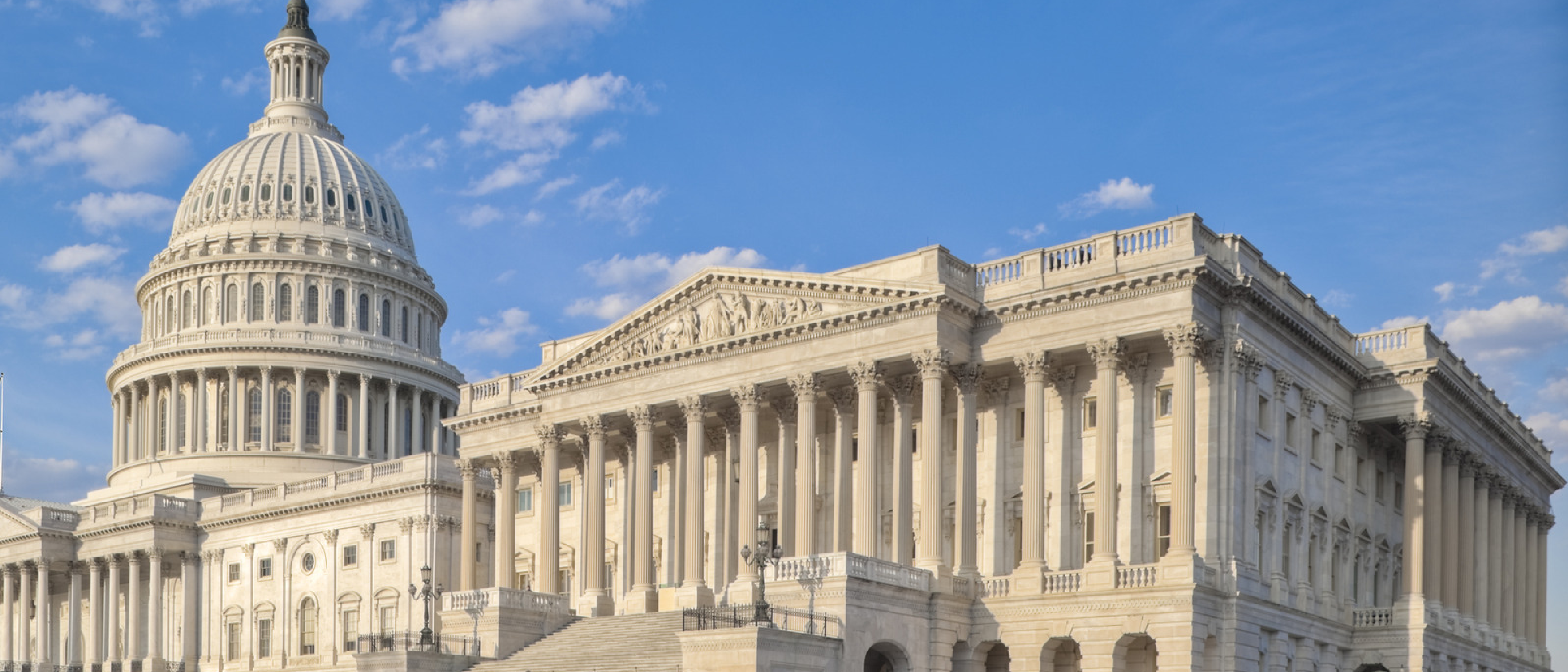
Over the past year, the U.S. House Office of Legislative Counsel (OLC) has reported a dramatic uptick in bills that originate from publicly available generative AI tools such as Chat GPT and Claude. Representatives’ offices, eager to accelerate policy formulation, have begun feeding policy outlines into these models and receiving near‑ready drafts in minutes. While the speed advantage is undeniable, the downstream cost has manifested as a flood of documents riddled with:
- Incorrect statutory citations
- Mis‑used legal terminology
- Omitted nuances that affect statutory interpretation
- Misclassification of “state” (e.g., excluding DC and tribal nations)
The OLC, traditionally the gatekeeper for legal precision, now finds its attorneys spending more time re‑editing AI‑generated drafts than they would crafting a bill from scratch.
Technical Pitfalls of Current Generative Models
Hallucinated Citations and Terminology
Large language models (LLMs) excel at pattern completion but lack a built‑in verification engine for legal references. When prompted to cite a precedent, the model often fabricates a plausible‑looking citation—a phenomenon known as “hallucination.” In legislative drafting, a single erroneous citation can:
- Mislead policymakers about the authority of a provision.
- Trigger costly judicial challenges if the law is later contested.
Context‑Sensitive Nuance Loss
Legal language hinges on subtle distinctions—e.g., “tax credit” vs. “tax deduction.” As Wade Ballou warned, “AI can’t determine whether a pot of money should be a ‘tax credit, tax deduction, tax exclusion or a grant.’” The model’s inability to resolve such context leads to drafts that are legally ambiguous, forcing OLC lawyers to rewrite entire sections.
Lack of Domain Expertise
Congressional staffers, relying on AI for first drafts, are “not forced to ‘learn the issue as deeply,’” according to a former OLC lawyer. This knowledge gap reduces the internal checks that traditionally catch errors before a bill reaches the OLC.
Operational Impact on the Office of Legislative Counsel
The OLC’s workload has ballooned:
- Review Time: Attorneys now allocate up to 70 % of their drafting time to error correction.
- Backlog Growth: The queue of pending bills has increased by an estimated 40 % since AI adoption accelerated.
- Resource Strain: Senior counsel, who previously oversaw complex policy analysis, are now pulled into line‑item editing.
These pressures have prompted OLC leadership to explore AI as a mitigation tool, not just a source of drafts.
Institutional Countermeasures: The Comparative Print Suite
A working group within the OLC has launched the Comparative Print Suite, an internal AI‑assisted utility designed to:
- Visualize statutory changes by overlaying proposed language onto the existing United States Code.
- Detect gaps: If the tool cannot locate the exact spot for an amendment, it returns an error, preventing “hallucinated” insertions.
By turning AI’s pattern‑matching strength into a validation layer, the suite aims to reduce the manual correction burden.
Lessons from Other AI‑Slop Battles
The challenges faced by Congress echo issues seen in other domains:
- YouTube’s fight against AI slop – the platform introduced stricter policies to curb low‑quality AI‑generated content, a move detailed in our coverage of AI moderation challenges.
- Zoom’s zero‑day exploit – highlighted how AI‑driven code generation can introduce security flaws, underscoring the need for rigorous review pipelines.
- Xfinity Shield’s AI‑based motion detection – demonstrates that even consumer‑grade AI systems require robust validation to avoid false positives.
These cases illustrate a broader industry trend: AI accelerates creation but must be paired with domain‑specific safeguards.
Why It Matters: Policy, Governance, and Democratic Integrity
Legislative Accuracy as a Pillar of Rule of Law
A law’s effectiveness rests on precise language. Errors introduced by AI can:
- Alter legislative intent, leading to unintended policy outcomes.
- Create loopholes that interest groups may exploit.
- Erode public trust when enacted statutes contain glaring mistakes.
Ethical and Accountability Concerns
When a bill is drafted by an algorithm, accountability becomes murky. Who is responsible for a mis‑citation—the legislator, the staffer who ran the model, or the AI provider? Establishing clear liability frameworks is essential to maintain democratic accountability.
Competitive Advantage vs. Quality Trade‑off
Some offices may view AI as a competitive edge, producing more bills faster than peers. However, the OLC’s experience suggests that speed without accuracy yields diminishing returns, as the cost of post‑hoc corrections can outweigh any time saved.
Future Outlook and Recommendations
- Mandate AI‑Assisted Review Protocols – Require every AI‑generated draft to pass through a verification engine (e.g., the Comparative Print Suite) before OLC review.
- Develop Domain‑Specific LLMs – Train models on the United States Code, Congressional Record, and historical statutes to improve citation fidelity.
- Invest in Staff Legal AI Literacy – Provide training so staffers understand AI limitations, encouraging deeper issue research before prompting the model.
- Create an Auditable Trail – Log prompts, model versions, and generated outputs to facilitate post‑legislative audits.
- Collaborate with External Experts – Partner with law schools and AI research labs to co‑design tools that respect both legal rigor and technological innovation.
By treating AI as a collaborative assistant rather than a substitute for legal expertise, Congress can harness its productivity benefits while safeguarding the integrity of the nation’s statutes.
FAQ
Q: Are the AI tools used by congressional staffers proprietary?
A: Most offices rely on publicly available models such as Chat GPT and Claude. The OLC’s own Comparative Print Suite is an internally developed utility.
Q: How many bills has the OLC identified as containing AI‑generated errors?
A: Exact numbers are not public, but sources describe the office as “swamped,” indicating a significant proportion of recent submissions require extensive correction.
Q: Can AI eventually replace legislative counsel?
A: Current models lack the nuanced judgment and statutory interpretation skills required for lawmaking. They are better suited as drafting aides, with human counsel retaining final authority.
Q: What steps can individual representatives take to reduce errors?
A: Conduct preliminary research, verify every citation manually, and use the Comparative Print Suite or similar validation tools before submitting drafts to OLC.
Q: Will there be new regulations governing AI use in legislative drafting?
A: While no federal rule exists yet, the OLC’s internal policies and potential future guidance from the Office of Management and Budget may shape best practices.
Source: Original Article