
Korea’s AI Momentum: A Deep Dive into AI Day Seoul
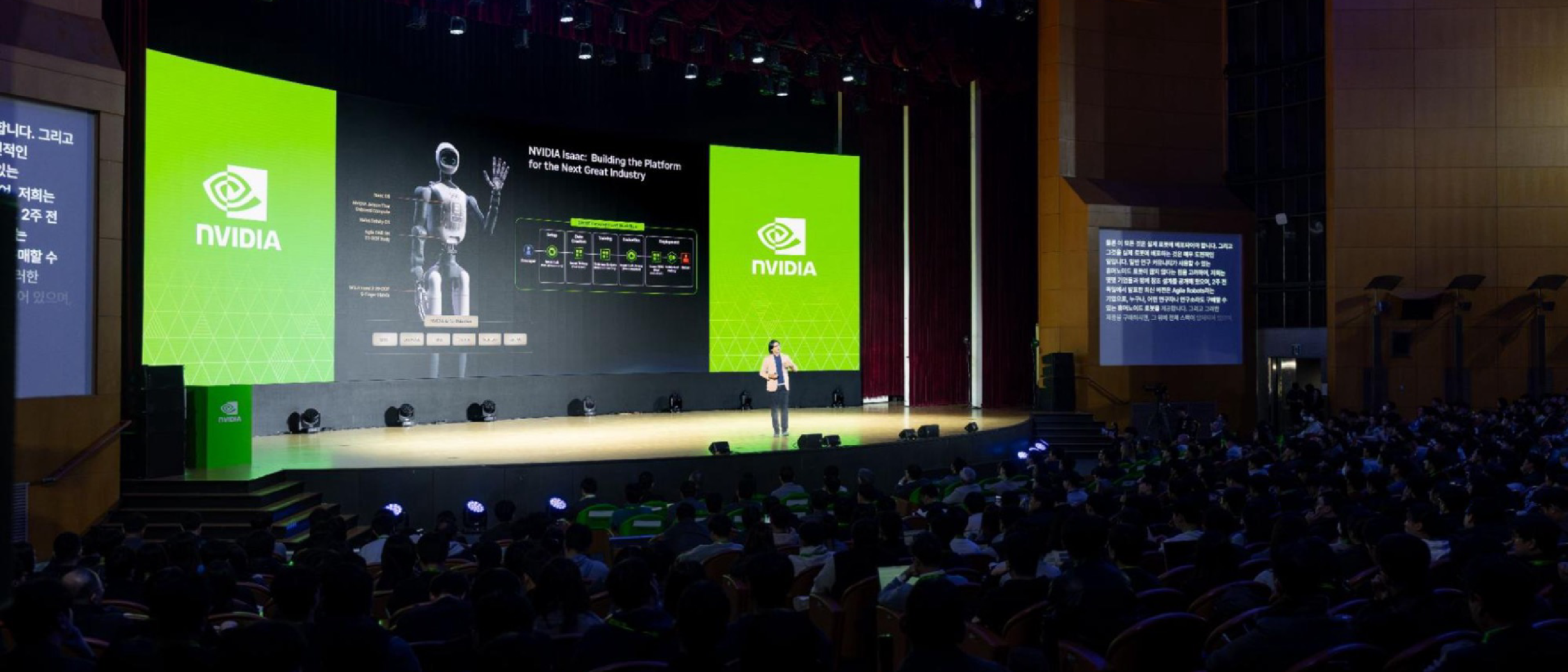
The recent AI Day Seoul, a two-day summit held at COEX, served as a pivotal gathering for over 2,000 attendees, firmly establishing Korea’s burgeoning leadership in the global artificial intelligence landscape. This landmark event brought together an impressive consortium of Korea’s industry titans, innovative startups, and vibrant developer communities, all united by a shared focus on the transformative potential of physical AI and sophisticated AI agents. Far from a mere conference, AI Day Seoul was a testament to a nation “punching above its weight,” as noted by NVIDIA’s Vice President of Robotics and Edge AI, Deepu Talla, in its relentless pursuit of real-world AI applications.
The convergence of these diverse stakeholders underscores a strategic national push towards integrating AI into tangible, operational environments. This isn’t just about theoretical advancements; it’s about deploying intelligent systems that interact with the physical world, from advanced robotics in manufacturing to autonomous agents streamlining complex enterprise operations. The energy and collaborative spirit observed at the event signal a robust ecosystem poised for significant breakthroughs, driven by both corporate investment and grassroots innovation.
The Power of Physical AI: Bringing Robotics to Life
Deepu Talla’s keynote address highlighted Korea’s exceptional contributions to the field of physical AI, particularly in robotics. His assertion that Korea is “punching above its weight” is backed by the impressive roster of companies leveraging NVIDIA platforms to push the boundaries of general-purpose robotics. Industry giants such as Doosan Robotics, Hyundai Motor Group, LG Electronics, and SK Group are at the forefront, transforming industrial automation and consumer experiences with intelligent machines.
The shift towards general-purpose robotics represents a significant evolution from traditional, highly specialized industrial robots. These new generations of robots, powered by advanced AI, are designed to be more adaptable, learning from their environments and performing a wider array of tasks with greater autonomy. This capability is crucial for navigating dynamic real-world scenarios, from flexible manufacturing lines to logistics and even personal assistance. Startups like Real World and Luda Robotics are also contributing to this wave, demonstrating agile innovation in applying AI to create more versatile and intelligent robotic solutions. Their work, often built on robust platforms provided by companies like NVIDIA, is instrumental in accelerating the deployment of these advanced systems into diverse sectors, promising enhanced efficiency, safety, and new service paradigms.
Architecting Autonomy: The Rise of Enterprise AI Agents
A central theme explored during the plenary sessions was the burgeoning field of AI agents, with Jonathan Cohen, Vice President of Applied Research at NVIDIA, providing a compelling demonstration of their capabilities. Cohen illustrated how enterprises can develop and deploy AI agents that they not only own but also fully control. This concept of ownership and control is paramount in an era where data privacy, security, and ethical AI deployment are critical concerns.
AI agents are designed to perform tasks autonomously, make decisions, and interact with various systems based on predefined goals and learned behaviors. For enterprises, this translates into the potential for unprecedented automation across functions, from customer service and data analysis to complex operational management. The ability to own and control these agents ensures that proprietary data remains secure, operational logic aligns with business objectives, and compliance standards are met. This also allows for greater customization and fine-tuning of agent behavior, ensuring they operate within specific organizational parameters. As AI agents become more sophisticated, the discussions around their responsible development and deployment become increasingly vital. For instance, ensuring that these agents provide safer, more reliable answers, much like advanced AI chatbots aim to do, is a key consideration for their widespread adoption. The implications for data handling and privacy in such advanced systems are also a significant area of ongoing research and development, echoing broader industry efforts to manage AI health studies and data responsibly.
A Collaborative Ecosystem: Industry, Startups, and Developers
The breakout sessions at AI Day Seoul showcased the breadth and depth of Korea’s AI ecosystem, featuring speakers from a diverse array of organizations. This included established tech giants and innovative startups, highlighting a synergistic environment where knowledge sharing and collaboration thrive. Representatives from Coupang Intelligent Cloud, Doosan Robotics, LG AI Research, LG Electronics, NAVER Cloud, SK Telecom, and Upstage presented their latest advancements and insights.
This mix of participants underscores a healthy ecosystem where large enterprises drive foundational research and large-scale deployment, while agile startups introduce disruptive innovations. The presence of companies like Coupang and NAVER Cloud demonstrates the integration of AI into e-commerce and cloud infrastructure, while LG AI Research and SK Telecom highlight deep dives into core AI technologies and telecommunications applications. This collaborative spirit is crucial for accelerating AI development and ensuring its practical application across various sectors. The vibrant startup scene, in particular, is a key driver of innovation, attracting significant interest and investment, much like how venture capital funds are targeting promising AI startups in other regions.
The Heart of Innovation: Community-Driven AI Development
Beyond corporate presentations, AI Day Seoul placed a significant emphasis on the grassroots developer community, recognizing their indispensable role in fostering innovation. The Agentic AI 10x Bootcamp Community Day was a testament to this, bringing together influential community leaders and groups dedicated to open-model building and collaborative development. Organizations like Pseudo Lab, Python Korea, Py Torch KR, HAERAE, Hugging Face KREW, Graph User Group, Womxn Who Code Korea, and Dnol (Datayanolja) were actively involved.
This community engagement is vital for democratizing AI development, encouraging the sharing of knowledge, tools, and best practices. Open-model building, in particular, accelerates research and development by allowing developers to build upon existing foundations, fostering a culture of rapid iteration and improvement. The direct quote from Hyunho Yang of SK Telecom perfectly encapsulates this sentiment: “It was a genuinely enjoyable time to have candid conversations,” and “Seeing the passion of fellow AI developers was a real source of inspiration for me.” Such passion and collaborative spirit are the bedrock upon which future AI breakthroughs are built, ensuring a continuous influx of talent and ideas into the ecosystem.
Future Outlook: Korea’s Trajectory in the Global AI Landscape
AI Day Seoul painted a clear picture of Korea’s ambitious trajectory in the global AI landscape. By focusing on physical AI and AI agents, the nation is positioning itself at the forefront of practical, real-world AI deployment. The strong collaboration between government, industry, academia, and the developer community creates a fertile ground for sustained innovation. The emphasis on leveraging advanced platforms, fostering a vibrant startup ecosystem, and empowering open-source contributions suggests a holistic strategy for long-term growth.
As AI continues to
as AI continues to permeate every facet of industry and daily life, Korea’s strategic emphasis on physical AI and enterprise agents positions it to become a global benchmark for applied intelligence. The momentum generated at AI Day Seoul is more than a snapshot—it is a catalyst that will shape the next decade of AI-driven transformation across manufacturing, logistics, telecommunications, and consumer experiences.
Scaling Physical AI: From Pilot Projects to Nationwide Adoption
- Industrial Automation: Companies such as Doosan Robotics and Hyundai Motor Group are scaling pilot deployments of collaborative robots (cobots) into full‑line production, leveraging NVIDIA’s Isaac platform to reduce integration time by up to 40 %.
- Smart Cities: SK Telecom’s 5G‑enabled edge AI nodes are being trialed in Seoul’s “Digital Twin” districts, where autonomous agents coordinate traffic flow, energy consumption, and public safety in real time.
- Healthcare & Elder Care: Startups like Real World are prototyping assistive robots for hospitals, integrating multimodal perception (vision, tactile, audio) to safely interact with patients and staff.
These initiatives illustrate a clear trajectory: from isolated proof‑of‑concepts to ecosystem‑wide rollouts that will drive productivity gains, reduce operational risk, and create new service models.
Enterprise AI Agents: Governance, Trust, and Competitive Edge
The ability to own and control AI agents, as demonstrated by Jonathan Cohen, addresses three critical enterprise concerns:
- Data Sovereignty – By hosting agents on private clouds or on‑premises edge servers, firms keep sensitive data within regulatory boundaries, a non‑negotiable requirement for sectors like finance and healthcare.
- Explainability & Auditing – NVIDIA’s NeMo‑Guardrails toolkit, showcased at the summit, enables developers to embed policy‑driven constraints that log decision pathways, facilitating compliance audits and ethical oversight.
- Customization at Scale – Enterprises can fine‑tune large language models (LLMs) on proprietary corpora, ensuring that agents reflect brand voice, domain‑specific terminology, and localized regulations.
The convergence of these capabilities is expected to unlock hyper‑personalized digital assistants, autonomous supply‑chain orchestrators, and AI‑driven decision support systems that operate with enterprise‑grade reliability.
Policy & Infrastructure: Government’s Role in Sustaining Growth
Korea’s Ministry of Science and ICT announced a $2 billion AI infrastructure fund during the event, earmarked for:
- National AI Supercomputing Cluster: Expanding GPU‑accelerated compute capacity to support large‑scale model training for both public research institutions and private firms.
- AI Talent Pipeline: Scholarships and apprenticeship programs targeting under‑represented groups, including women and rural students, to broaden the AI workforce.
- Regulatory Sandboxes: Designated zones where companies can test high‑risk AI applications (e.g., autonomous drones, medical diagnostics) under relaxed regulatory oversight, with fast‑track safety evaluations.
These policy levers aim to reduce friction between innovation and regulation, ensuring that breakthroughs can transition swiftly from lab to market.
Community Momentum: Open‑Model Collaboration as a Growth Engine
The Agentic AI 10x Bootboot Camp Community Day highlighted several open‑source milestones that will likely shape the next wave of AI development:
| Initiative | Description | Anticipated Impact |
|---|---|---|
| Pseudo Lab’s “K‑Robotics Suite” | A collection of ROS‑compatible modules optimized for NVIDIA Jetson devices. | Lowers entry barrier for startups building edge‑ready robots. |
| Python Korea’s “AI‑Agent Blueprint” | End‑to‑end notebooks demonstrating how to fine‑tune LLMs for task‑specific agents. | Accelerates prototyping cycles for enterprise teams. |
| Hugging Face KREW’s “Korean‑LLM Hub” | A curated repository of Korean‑language models with permissive licenses. | Boosts language‑specific applications, from chatbots to content moderation. |
| Womxn Who Code Korea’s mentorship program | Pairing senior AI engineers with emerging female talent for hands‑on projects. | Improves diversity and retention in the AI sector. |
These collaborative outputs not only democratize access to cutting‑edge tools but also create a feedback loop where community contributions inform commercial product roadmaps, fostering a virtuous cycle of innovation.
Challenges Ahead: Navigating Technical, Ethical, and Market Hurdles
While the outlook is bright, several challenges must be addressed to sustain Korea’s AI ascendancy:
- Compute Cost & Energy Consumption: Training large models remains power‑intensive; investments in renewable‑powered data centers are essential to keep carbon footprints manageable.
- Talent Retention: Global competition for AI engineers is fierce; Korea must continue to offer compelling research environments, competitive compensation, and clear career pathways.
- Ethical Governance: As agents become more autonomous, robust frameworks for bias mitigation, transparency, and accountability will be required to maintain public trust.
- Interoperability Standards: With a multitude of hardware vendors and software stacks, industry‑wide standards (e.g., OpenAI’s OpenAPI for agents, ROS 2 for robotics) are needed to avoid siloed solutions.
Proactive strategies—such as public‑private research consortia, cross‑industry standardization bodies, and continuous ethics training—will be pivotal in overcoming these obstacles.
Conclusion: A Blueprint for Global Leadership
AI Day Seoul demonstrated that Korea is not merely adopting AI; it is actively shaping the future of physical intelligence and autonomous agents. By aligning corporate ambition, startup agility, community enthusiasm, and governmental support, the nation has crafted a holistic ecosystem capable of delivering real‑world AI at scale. The event’s highlights—NVIDIA’s platform leadership, the surge of Korean robotics innovators, and the thriving open‑model community—serve as a blueprint for other countries seeking to transition from AI research to AI impact.
As the world watches, Korea’s next steps will likely involve:
- Scaling successful pilots into nationwide deployments across manufacturing, logistics, and smart‑city initiatives.
- Embedding AI governance frameworks that balance innovation with ethical responsibility.
- Cultivating a diverse talent pool that can sustain long‑term research and product development.
If these pillars continue to be reinforced, Korea will not only maintain its “punch‑above‑its‑weight” reputation but also become a global reference point for responsible, application‑centric AI.
Frequently Asked Questions
Q1: What distinguishes “physical AI” from traditional robotics? Physical AI combines perception, learning, and decision‑making capabilities directly on the robot’s edge hardware, enabling real‑time adaptation to unstructured environments. Traditional robots rely on pre‑programmed motions and limited sensor feedback.
Q2: How can enterprises ensure they truly “own” their AI agents? By deploying agents on private infrastructure (on‑premises, private cloud, or secure edge nodes) and using open‑source model weights with customizable licensing, companies retain full control over data, model updates, and inference pipelines.
Q3: Which NVIDIA platforms were highlighted at the summit? Key platforms included NVIDIA Isaac Sim for robotics simulation, NVIDIA Jetson edge AI modules for on‑device inference, and NVIDIA NeMo for building and fine‑tuning large language models.
Q4: Are there any scholarships or training programs for aspiring AI developers in Korea? Yes. The Ministry of Science and ICT’s AI talent initiative offers scholarships for undergraduate and graduate studies, as well as boot‑camp style training through partners like Python Korea and Womxn Who Code Korea.
Q5: How can international developers participate in Korea’s open‑model ecosystem? Developers can contribute to repositories hosted on GitHub under the Korean‑LLM Hub, join community meetups organized by Py Torch KR, or collaborate on cross‑border projects via the Agentic AI 10x Bootcamp virtual sessions.
Q6: What are the next major events in the Korean AI calendar? Upcoming gatherings include AI Expo Busan (March 2027), the K‑Robotics Innovation Forum (July 2027), and the Open‑Model Summit Seoul (November 2027), each building on the momentum generated by AI Day Seoul.
Source: Original Article