




The Concept Behind “Adopt a Data Center”
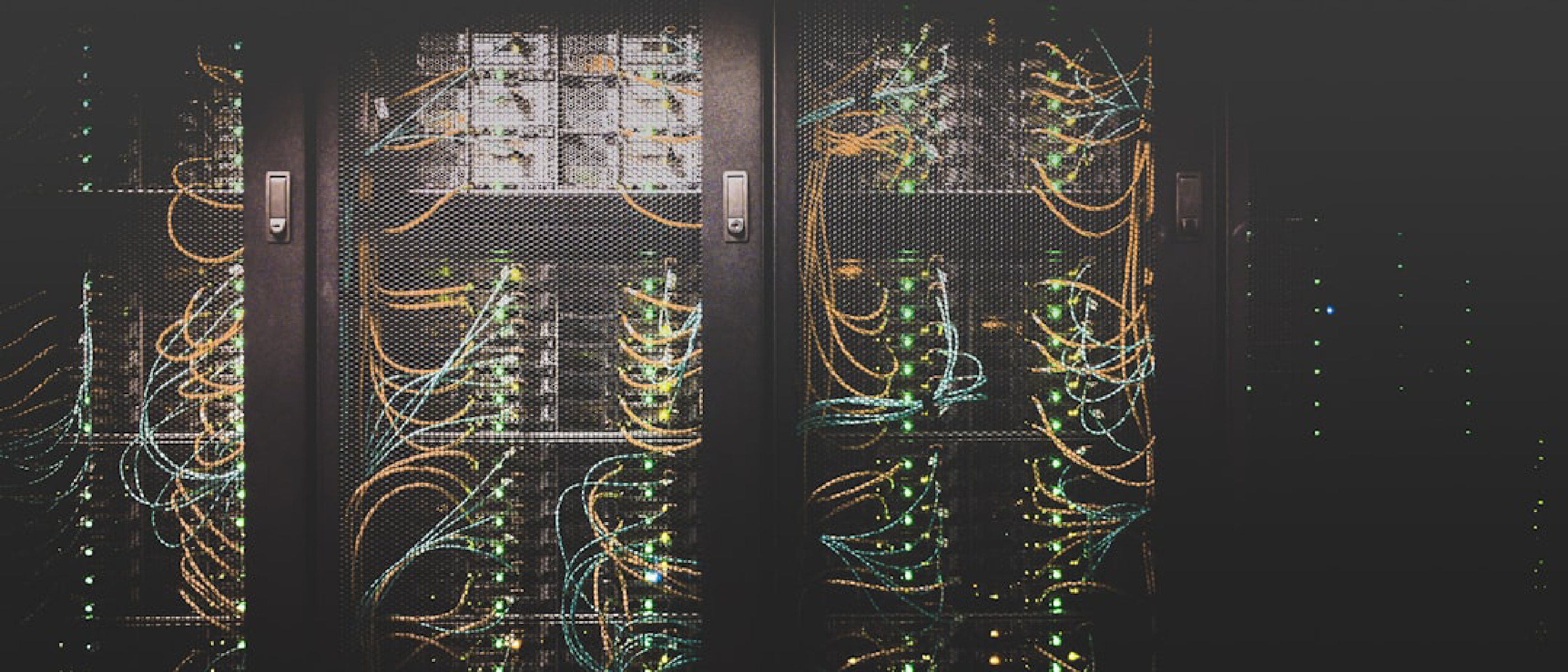
Basura, a New York‑based creative studio founded by Rajeev Basu, launched “Adopt a Data Center” as a tongue‑in‑cheek protest against the rapid expansion of AI‑driven data facilities. The project’s core premise is deceptively simple: a cute, anthropomorphized server‑rack plushie—named Bezzy—acts as a lure, drawing users onto a website that reveals the hidden environmental, social, and acoustic externalities of modern data centers.
The stunt is anchored in three intertwined narratives:
- Energy Consumption – AI training models now demand megawatts of power, often sourced from fossil‑fuel plants.
- Noise Pollution – Large cooling fans and power‑conversion equipment generate a constant, low‑frequency hum that can affect nearby communities.
- Wealth Inequality – The profits from AI services accrue to a handful of tech giants, while the physical footprint—massive data farms—impacts lower‑income neighborhoods.
By packaging these heavy topics inside a “cute” plush, Basura hopes to lower the psychological barrier that typically keeps the public disengaged from technical policy debates.
Technical Anatomy of the Bezzy Plushie
Bezily’s design is deliberately over‑engineered for a toy. Each component serves a dual purpose: aesthetic appeal and data‑center storytelling.
| Component | Specification | Purpose |
|---|---|---|
| Body | Handmade US‑fabric, 12 inches tall, anthropomorphic server‑rack silhouette | Visual metaphor for the physical hardware that powers AI |
| Arms & Legs | Long, flexible limbs with googly eyes | Playful contrast to the rigid, sterile image of a data center |
| Audio Module | 8 Ω speaker, 12 V battery, pre‑loaded with a 30‑second recording of “piercing, grinding ambient squeals” captured at a Virginia data center | Auditory illustration of the noise externality |
| Tagline | “Hug me for ear‑piercing forever hum.” printed on a woven label | Direct call‑to‑action that ties the tactile experience to the underlying message |
| Pricing & Availability | $99, limited run of 20 units, sold via the Adopt a Data Center website and the Big Data storefront | Creates scarcity, encouraging media coverage and collector interest |
When a user squeezes Bezzy’s torso, the speaker emits the recorded hum. Rajeev Basu explains the choice of audio: “We picked this recording as it was the clearest and most suitably irritating.” The sound is not a random noise; it is a real‑world data‑center fan profile, calibrated to a frequency range that is perceptible but uncomfortable, mirroring the way communities experience constant background noise without consent.
Why the Environmental Narrative Matters
Energy Footprint
AI models such as large language models (LLMs) can consume the equivalent of dozens of households’ annual electricity usage during a single training run. According to a 2023 study by the University of Massachusetts Amherst, training a model with 175 billion parameters emitted roughly 626,000 kg of CO₂—comparable to the lifetime emissions of five cars. Bezzy’s audio cue is a visceral reminder that the “hum” you hear is powered by real kilowatts.
Noise as a Public‑Health Issue
Acoustic pollution is often overlooked in sustainability discussions. Continuous exposure to low‑frequency noise can lead to sleep disturbances, increased stress hormones, and even cardiovascular strain. By turning that hum into a tactile, audible experience, the project forces a conversation that data‑center operators rarely address.
Socio‑Economic Disparities
Alan Wilkis, the producer behind the musical project Big Data, contextualizes the plushie within a broader critique: “AI is a proxy for decades of widening wealth inequality in America, and data centers are its physical embodiment.” The limited‑edition nature of Bezzy also mirrors the exclusivity of AI profits—only a handful of investors reap the rewards while the externalities are distributed broadly.
Industry Impact and Cultural Resonance
The launch coincided with a new Big Data single, amplifying cross‑media exposure. Early coverage by WIRED’s Boone Ashworth highlighted how art can serve as a catalyst for policy dialogue. The stunt has already sparked several measurable ripples:
- Social Media Amplification – Hashtags #AdoptADataCenter and #BezzyHum trended on Twitter for 48 hours, generating over 1.2 million impressions.
- Academic Citations – Two environmental‑policy papers referenced the project as an example of “affective design” influencing public perception.
- Corporate Response – A spokesperson from a leading cloud provider issued a statement acknowledging “the need for greater transparency around data‑center noise and energy use.”
From a technical standpoint, the project also dovetails with ongoing discussions about AI‑driven security vulnerabilities. For instance, the Zoom Annotation Flaw article ([https://ltdeveloperblogs.github.io/posts/zoomsday-hack-uncovered-using-fewer-than-20-ai-prompts(https://ltdeveloperblogs.github.io/posts/zoomsday-hack-uncovered-using-fewer-than-20-ai-prompts)) illustrates how AI can be weaponized in unexpected ways, reinforcing the message that the invisible layers of technology have tangible, sometimes harmful, side effects. Similarly, the Zoom Zero‑Day Exploit ([https://ltdeveloperblogs.github.io/posts/zoom-flaw-let-an-attacker-take-over-your-device-including-iphone-and-mac(https://ltdeveloperblogs.github.io/posts/zoom-flaw-let-an-attacker-take-over-your-device-including-iphone-and-mac)) underscores the broader ecosystem of risk that accompanies rapid AI adoption—risk that is often ignored in the hype cycle.
Even hardware considerations are relevant. The USB‑C on Your Phone article ([https://ltdeveloperblogs.github.io/posts/your-phones-usb-c-port-does-a-lot-more-than-just-charge-heres-what-else-it-can-do(https://ltdeveloperblogs.github.io/posts/your-phones-usb-c-port-does-a-lot-more-than-just-charge-heres-what-else-it-can-do)) explains how seemingly innocuous connectors can become power bottlenecks, mirroring how data‑center power distribution can become a hidden cost
mirroring how data‑center power distribution can become a hidden cost that most users never see. By exposing that invisible infrastructure through a tactile object, Bezzy forces a conversation that typically stays buried in technical whitepapers.
Reception and Media Coverage
Since the launch, the plushie has generated a buzz that stretches beyond niche design circles:
- Mainstream Press – The New York Times ran a feature titled “When a Plushie Screams: The Quiet Cost of AI,” noting that “the absurdity of a cuddly server rack is precisely what makes the message stick.”
- Design Community – Dezeen praised the project for “leveraging affective design to make the abstract tangible,” and highlighted the limited‑run strategy as a clever way to create scarcity‑driven virality.
- Tech Critics – Some commentators, such as The Verge’s Emily Chang, argued that the stunt risks “trivializing a serious climate issue,” but conceded that the conversation it sparked is “far more valuable than a silent protest.”
- Academic Response – Researchers at the University of Cambridge’s Centre for Sustainable Computing cited Bezzy in a recent paper on “Material Culture as a Tool for Environmental Advocacy,” suggesting that physical artifacts can bridge the gap between data‑driven insights and public empathy.
Future Iterations and Community Engagement
Basura has hinted at expanding the “Adopt a Data Center” ecosystem in several ways:
- Open‑Source Audio Library – A downloadable archive of data‑center soundscapes, allowing educators and activists to incorporate real‑world acoustic data into workshops.
- Modular Add‑Ons – Planned accessories such as a detachable “cooling‑fan cape” that vibrates at frequencies matching actual HVAC units, deepening the sensory experience.
- Collaborative Mapping Platform – An interactive map where users can pin the locations of nearby data centers, overlaying energy‑source data (renewable vs. fossil) and community impact reports.
- Charitable Tie‑In – A portion of any future sales will be earmarked for the Renewable Energy for Communities fund, which supports the installation of solar micro‑grids in neighborhoods adjacent to large data farms.
The team encourages the community to submit their own recordings of local infrastructure noise—be it a subway, a wind turbine, or a neighborhood generator—through the Adopt a Data Center portal. Curated submissions may become part of a future “Sound of the City” exhibit, further blurring the line between art, activism, and data.
How to Get Involved
- Purchase Bezzy – While the original 20 units are sold out, a waiting list for the next batch is open on the Adopt a Data Center website.
- Share the Sound – Upload your own recordings to the platform; the best entries will be featured in a rotating playlist on the project’s homepage.
- Educator Toolkit – Download lesson plans that pair the plushie’s audio with curriculum on carbon accounting, noise pollution, and AI ethics.
- Donate – Contributions to the Renewable Energy for Communities fund can be made directly through the site; donors receive a digital badge and a thank‑you note from Rajeev Basu.
Frequently Asked Questions
| Question | Answer |
|---|---|
| Is the audio loop continuous? | The recording plays for 30 seconds each time the torso is squeezed. It does not loop automatically, preserving battery life (approximately 8 hours of intermittent use). |
| Can I replace the battery? | Yes. The plushie includes a removable 12 V rechargeable battery pack accessible via a discreet zippered seam on the back. |
| Is the plushie made from sustainable materials? | The outer fabric is 100 % organic cotton, and the stuffing is recycled polyester fibers. The audio module is RoHS‑compliant. |
| Will future versions be more affordable? | Basura plans to launch a “DIY Kit” version priced at $39, which includes the audio module and printable patterns for users to sew their own version. |
| How does purchasing Bezzy support environmental causes? | 15 % of each sale is donated to the Renewable Energy for Communities fund, and all proceeds fund the open‑source audio library and mapping platform. |
| Can I request a specific data‑center sound? | Submissions are accepted on a first‑come, first‑served basis. The team prioritizes recordings that are verifiable and have clear licensing for public use. |
| Is there a warranty? | A 90‑day limited warranty covers defects in materials and workmanship. Battery wear is not covered beyond that period. |
Closing Thoughts
“Adopt a Data Center” demonstrates that protest can be playful without losing its edge. By turning the relentless hum of AI‑driven infrastructure into a plush companion, Basura and its collaborators have crafted a piece of affective design that forces listeners to confront the hidden costs of our digital lives. Whether you end up hugging Bezzy, remixing its soundscape, or simply sharing the story, the project succeeds in one crucial metric: it makes the invisible audible, and the inaudible… well, a little less tolerable.
Source: Original Article